Sour Dough Bread for Beginners: A Simple Step-by-Step Guide to Your First Homemade Loaf
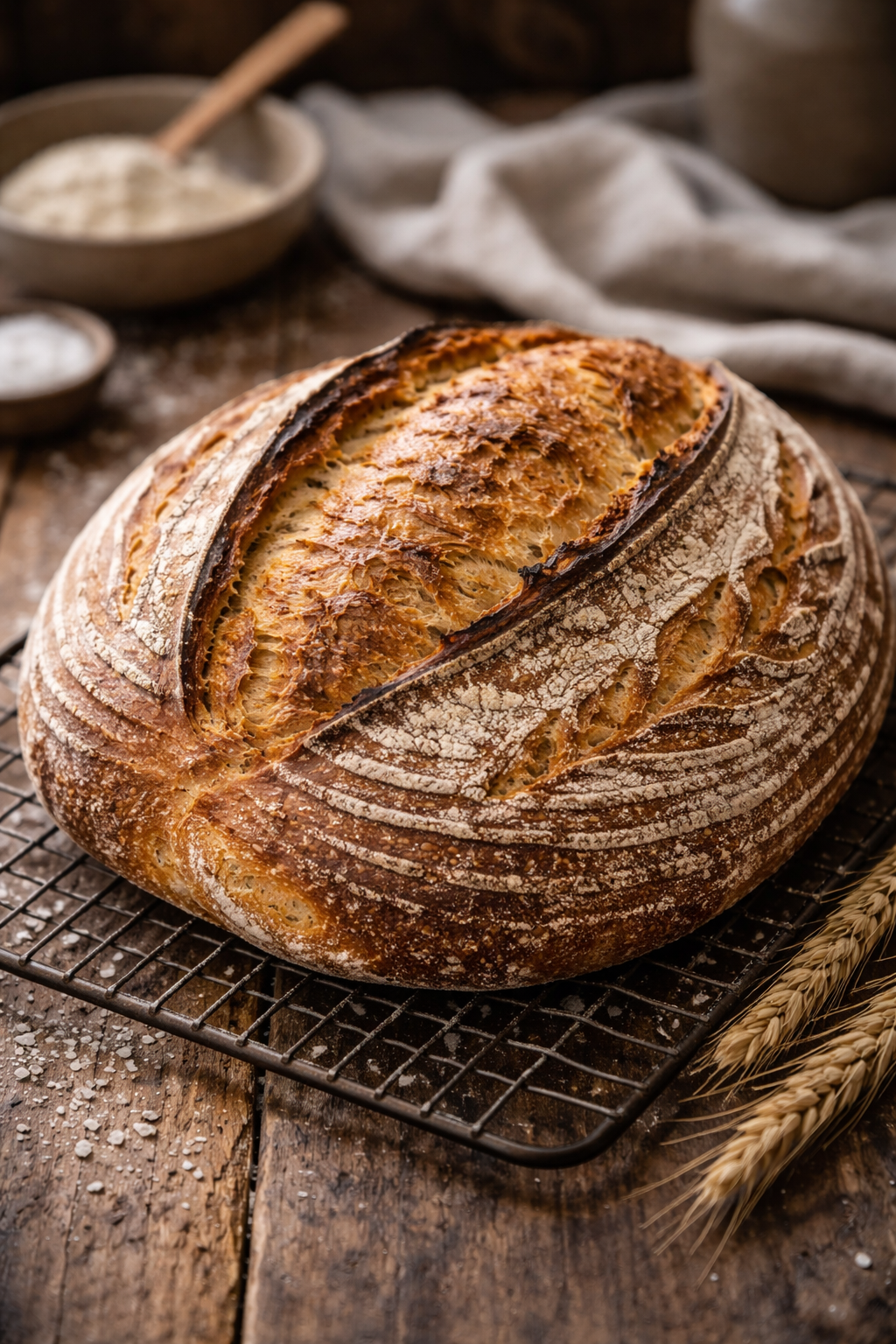
If you’ve ever admired those crusty, bakery-style loaves with airy interiors and thought, “I could never make that,” this guide is for you. Sour dough bread for beginners doesn’t have to be intimidating, complicated, or time-consuming. With the right approach, a little patience, and a few simple ingredients, anyone can bake a beautiful loaf of sourdough bread at home.
Sourdough has been around for thousands of years, yet it’s recently surged in popularity thanks to its rustic charm, health benefits, and irresistible flavor. Unlike store-bought yeast bread, sourdough uses natural fermentation to rise, giving it a distinctive tang and chewy texture that’s hard to beat.
In this beginner-friendly guide, you’ll learn exactly how sourdough works, what tools you need (and don’t need), and how to bake your first successful loaf without stress. Whether you’re baking for fun, health reasons, or to save money, this is your complete starting point.
What Is Sourdough Bread?
Sourdough bread is made using a natural starter instead of commercial yeast. This starter is a mixture of flour and water that ferments over time, cultivating wild yeast and beneficial bacteria from the environment.
These natural microorganisms:
Make the dough rise
Create sourdough’s signature tangy flavor
Improve digestibility
Enhance texture and shelf life
For beginners, the biggest difference between sourdough and regular bread is time, not difficulty. Sourdough relies on slow fermentation instead of instant yeast, but the hands-on effort is surprisingly minimal.
Why Sourdough Bread Is Perfect for Beginners
Despite its reputation, sourdough is actually very forgiving. Once you understand the basics, it’s hard to mess up completely. Here’s why sour dough bread for beginners is a great baking project:
Minimal ingredients (just flour, water, salt)
No commercial yeast required
Flexible schedule (fermentation does the work)
Health benefits from natural fermentation
No kneading required for many beginner recipes
You don’t need fancy skills — just patience and curiosity.
Basic Ingredients for Beginner Sourdough Bread
One of the best things about sourdough is its simplicity. You only need four ingredients:
1. Flour
Bread flour is ideal for beginners because of its higher protein content, which helps with structure. All-purpose flour also works well if that’s what you have.
2. Water
Use filtered or non-chlorinated water if possible. Chlorine can inhibit fermentation.
3. Salt
Salt adds flavor and strengthens gluten. Use fine sea salt or kosher salt.
4. Sourdough Starter
This is the heart of your bread. You can either make your own starter from scratch or use one from a friend or bakery.
What Is a Sourdough Starter (and Do Beginners Really Need One)?
Yes — but don’t worry. A sourdough starter is simply fermented flour and water. Over time, it becomes active and bubbly, ready to leaven bread.
Two beginner-friendly options:
Make your own starter (takes 7–10 days)
Use an established starter (instant gratification)
Once your starter is active, you can use it indefinitely as long as you feed it regularly.
Tools You Need (and What You Can Skip)
You don’t need a professional kitchen to bake sourdough. Here’s a simple beginner checklist:
Essential Tools:
Mixing bowl
Kitchen scale (highly recommended for accuracy)
Bench scraper or spatula
Clean kitchen towel
Dutch oven or heavy oven-safe pot
Optional but Helpful:
Banneton (proofing basket)
Lame or sharp knife for scoring
Parchment paper
If you don’t have everything yet, don’t stress — sour dough bread for beginners is all about working with what you have.
How Sourdough Fermentation Works (Beginner Explanation)
Fermentation is what gives sourdough its flavor and structure. Here’s the simplified version:
Starter feeds on flour
Natural yeast produces gas
Gluten traps the gas
Dough rises slowly
Flavor develops over time
Long fermentation equals better taste and texture. That’s why sourdough bread is often easier to digest than regular bread.
Easy Sourdough Bread Recipe for Beginners
This is a no-knead sour dough bread for beginners recipe that produces a crusty loaf with minimal effort.
Ingredients:
100g active sourdough starter
375g warm water
500g bread flour
10g salt
Step 1: Mix the Dough
In a large bowl, mix starter and water until cloudy. Add flour and salt, and stir until a shaggy dough forms. Cover and rest for 30 minutes.
Step 2: Stretch and Folds
Instead of kneading, gently stretch the dough and fold it over itself. Do this 3–4 times every 30 minutes.
This builds gluten without effort.
Step 3: Bulk Fermentation
Cover the bowl and let the dough rise at room temperature for 4–6 hours. It should look puffed and airy but not doubled.
Step 4: Shape the Dough
Turn the dough onto a lightly floured surface. Gently shape into a round loaf. Don’t overwork it.
Step 5: Final Proof
Place dough in a floured bowl or banneton. Cover and refrigerate overnight (8–12 hours).
Cold proofing improves flavor and makes scoring easier.
Step 6: Bake
Preheat oven to 450°F with Dutch oven inside. Carefully transfer dough onto parchment, score the top, and bake covered for 30 minutes. Remove lid and bake another 15–20 minutes until golden brown.
How to Tell If Your Sourdough Bread Is Done
Beginner bakers often wonder if their bread is fully baked. Look for:
Deep golden crust
Hollow sound when tapped on bottom
Internal temperature of 205–210°F
Let the bread cool completely before slicing — this is crucial!
Common Beginner Sourdough Mistakes (and How to Avoid Them)
1. Using an inactive starter
Your starter should be bubbly and doubled in size before baking.
2. Over-fermenting
Too much fermentation causes flat bread. Watch the dough, not the clock.
3. Cutting too soon
Slicing hot bread leads to gummy texture.
4. Too much flour during shaping
This prevents proper sealing and rise.
Mistakes are part of learning — every loaf teaches you something.
Tips for Beginner Sourdough Success
Keep a baking journal
Use a kitchen scale
Start with simple recipes
Practice patience
Don’t chase perfection
Even “imperfect” sourdough is usually delicious.
How to Store Homemade Sourdough Bread
Sourdough lasts longer than regular bread thanks to fermentation.
Store at room temperature, cut side down
Avoid plastic bags (causes sogginess)
Freeze slices for long-term storage
It’s perfect for toast, sandwiches, and grilled cheese.
Is Sourdough Bread Healthier?
Many people choose sour dough bread for beginners because of potential health benefits:
Easier digestion
Lower glycemic impact
Improved nutrient absorption
Fewer preservatives
While it’s still bread, it’s often better tolerated than commercial loaves.
Frequently Asked Questions About Sourdough Bread for Beginners
Is sourdough hard to make?
Not at all — it just requires patience.
Do I need special flour?
No, all-purpose works fine for beginners.
Why didn’t my bread rise?
Usually due to inactive starter or under-fermentation.
How long does sourdough take?
About 24 hours total, but only a few minutes of hands-on time.
Final Thoughts: Your First Sourdough Loaf Starts Today
Learning sour dough bread for beginners is less about perfection and more about process. Once you bake your first loaf, you’ll realize how approachable sourdough truly is. Every loaf gets better, and the confidence you gain carries over into other baking projects.
Start simple, trust the fermentation, and enjoy the journey. Before long, you’ll be pulling golden, crackly loaves from your oven like a pro.
If you’re ready, grab your flour — your first sourdough adventure begins now 🍞✨